Download from Bandcamp
Enter URL of the Bandcamp page below
Great Beast 666 (Black Magic & Satanic Verses....
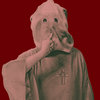
Includes unlimited streaming via the free Bandcamp app, plus high-quality download in MP3, FLAC and more.
Once labelled, “The wickedest man in the world“, Aleister Crowley (1875-1947) was an influential and highly controversial British occultist, writer, poet, magician, mystic, sexual deviant and all-around misfit- and banned from Mussolini’s Italy for acts of extreme depravity..! He was celebrated for his pioneering work in ceremonial magic and occultism, and his books and teachings have been widely read and referenced by artists, philosophers, and musicians alike... These are some of the only known recordings from the infamous occultist, mystic, magician, poet, novelist, sexual deviant, and all-around misfit, Aleister Crowley. Recorded onto wax cylinder in the early 1910s, and later transferred to 78 RPM discs. The tracks include Crowleys recitation of the first two Enochian Keys, original poetry, incantations, and songs - plus bonus material from Band of Pain, based on Crowleys dark art... Make it an essential piece of occult history !!
Born to a wealthy family in Royal Leamington Spa, Warwickshire, Crowley rejected his parents' fundamentalist Christian Plymouth Brethren faith to pursue an interest in Western esotericism. He was educated at Trinity College at the University of Cambridge, where he focused his attention upon mountaineering and poetry, resulting in several publications. Some biographers allege that here he was recruited into a British intelligence agency, further suggesting that he remained a spy throughout his life. In 1898, he joined the esoteric Hermetic Order of the Golden Dawn, where he was trained in ceremonial magic by Samuel Liddell MacGregor Mathers and Allan Bennett. He went mountaineering in Mexico with Oscar Eckenstein, before studying Hindu and Buddhist practices in India.
He founded the religion of Thelema, identifying himself as the prophet entrusted with guiding humanity into the Æon of Horus in the early 20th century. A prolific writer, he published widely over the course of his life...
Crowley gained widespread notoriety during his lifetime, being a drug user, bisexual and an individualist social critic. Crowley has remained a highly influential figure over Western esotericism and the counterculture of the 1960s and continues to be considered a prophet in Thelema. He is the subject of various biographies and academic studies...
He was also a debauched, lunatic that once ate a cat during a ritual, claiming it was an act of transgression to show he could do anything that he wanted without moral restraint. He practised necromancy and satanism and developed a system of ritualistic sex magic that he believed could evoke spiritual forces and enhance his magical powers. And he also claimed to have been possessed by a spirit named Aiwass, who dictated to him the text of “The Book of the Law,” which became central to his religious philosophy, Thelema and spoke fluent Enochian - a mysterious language that 16th century occultists John Dee and Edward Kelley recorded in their private journals. They claimed this ‘celestial speech’ allowed magicians and occultists to communicate with angelic realms.
In the year 1581, occultists John Dee and Edward Kelley, claimed to have received communications from angels, who provided them with the foundations of a language with which to communicate with ‘the other side’. This ‘angelic’ language contained its own alphabet, grammar and syntax, which they wrote down in journals. The new language was called "Enochian" and comes from John Dee's assertion that the Biblical Patriarch Enoch had been the last human to know the language.
Influences...
Over the years many bands and musicians have cited Crowley’s works as an influence. He appears on the cover of The Beatles‘ Sgt. Pepper’s Lonely Hearts Club Band album. Bowie‘s 1983 hit single, Let’s Dance paraphrases Crowley’s 1923 poem “Lyric of Love to Leah“. And in 1980, Ozzy Osbourne and Bob Daisley even wrote a song called, Mr. Crowley...
David Bowie, The Doors, Black Sabbath, Led Zeppelin, Killing Joke, Iron Maiden, Tool, Throbbing Gristle were all heavily influenced - and Goth legends Field of The Nephlim - who's lead vocalist Carl McCoy's lyrics — as well as the artwork that results from the collaboration with his partner Lynn under the name Sheer Faith — is steeped in symbolism and references to Crowley. The title of the song "Moonchild" is taken from the Crowley text of the same name; the song "Psychonaut" is also he title of the book by chaos magician Peter Carroll. McCoy has often referred to Fields of the Nephilim performances as rituals...
LOUDER THAN WAR...
TURN AND FACE THE STRANGE - Rachel Brett investigates Aleister Crowley’s influence on Bowie and other modern artists in popular music.
When the man who sold the world started studying the wickedest man in the world an alchemistical effect was inevitable. A megalomaniac, poet, mystic, drug-addicted aesthete with multiple personas and an iconic figure who hugely influenced pop culture. And so it was that David Bowie and Aleister Crowley shared some astral space.
Aleister Crowley was a self-aggrandising occultist from a puritanical Christian family who developed a thirst for outraging others early on. Adolescents of every generation want to overthrow the system and transgress, only this decadent teenager that read Baudelaire and Huysmans, was radicalised, he added a ’K’ to the spelling of magic to differentiate his own variety, and went on to establish his own magical order of the Ordo Templi Orientis (O.T.O.). However, the notorious Illuminatus posh boy would eventually end his infamous life of evil penniless in a post-war Hasting. His power seemingly gobbled up by the heroin he was addicted to. By the end of his life black magic was out of fashion, he couldn’t get a gig; no one wanted a Satanist anymore. Yet as the decades that followed after his death faded into each other and the original 1950’s teenager made way for the revolutionary 60’s, the Teenager grew restless and began seeking more to rebel against. This unsatisfied generation was angry that the promise of liberty which modernity offered was not to be. Crowley’s doctrine ‘Do What Thou Wilt’ started to ring true once more for a generation desperate for a new spiritual saviour. Along with the Beats, existentialism, and counterculture, an occult revival was imminent.
Pop messiahs of the age ushered in the return of the Beast. Crowley appears on Peter Blake’s cover of the Beatles’ Sgt Pepper’s Lonely Hearts Club Band. A statue of him also appears on the cover of the Doors’ album, Doors 13. Mick Jagger was seen carrying occult books ahead of the Stones album His Satanic Majesties, that cradled one of their most anthemic songs; ‘Sympathy for the Devil’. Both Jagger and Marianne Faithful knew Kenneth Anger, the Avante-Garde filmmaker and Crowleyite. Jagger recorded the soundtrack to his film Invocation to my Demon Brother, while Marianne Faithful appeared in Lucifer Rising. ‘Hail Atlantis!’ intoned Donavan. Black magic became the new black magic in a back to the future return to old spiritual ideas. Crowley’s career revival was on and the comeback tour secured. His call for a new world order beyond the conventions of society couldn’t have been more suitable for the 60’s libertarian culture of sex, drugs and rock and roll...
The black magic machine was still going strong as the 1970’s dawned. In and of itself this wasn’t so strange, during this period occult bookshops were springing up and the children of the revolution were eager consumers of the mystic works these shops peddled. This zeitgeist moment that hailed in the psychedelic aeon floated into the next era as pop culture continued its exploration of magick and mysticism. Even suburbia had a Buddha…
He gazed a gazeless stare.
Travelling from mod to god David Jones landed from South London to planet pop at a time when it was being choked to death by long hair, prog and noodling wig-outs. Hungry for knowledge and otherworldly existences, through drapes of velvet and tapestry, to a jazz rhythm emerged Bowie. On a discovery mission, the fallen star devoured a cornucopia of experimental procedures, practices and philosophies along the way including; the occult, fascism, Nietzsche, Buddhism, yoga, mime, acting, astrology the cut-up and drugs. Within this milieu little wonder he should have found his way to Crowley. Or perhaps Crowley had found his way to him?
Bowie made no secret of his enthralment with the dark priest that was Crowley throughout his career frequently discussing the subject in interviews. As early as 1971 his occult adoration made its way into his songs, famously in ‘Quicksand’ from Hunky Dory:
I’m closer to the Golden Dawn Immersed in Crowley’s uniform of imagery. But what is beyond?
The Hermetic Order of the Golden Dawn was a magical secret society that Crowley was a part of and by 1904 he achieved top-level magus status by proclaiming to have made contact with a demi-god called Aiwass in Egypt...
Music like magick has a transmuting power to transcend beyond the rational. Bowie galvanised these powers of representations and symbolism throughout his work. Often referred to as a renaissance man, with multi-personae’ his characters reflected back the postmodern ego of a fragmental mirror that was forever searching for the self. He created an alternative world where metamorphic mutations happened and his alien pop selves could dwell.
Throwing darts in lover’s eyes
After Ziggy Stardust had fallen to earth, he was killed off by a rock and roll suicide before being reincarnated. Meanwhile, David Bowie had become addicted to cocaine and was vulnerable. Whilst filming The Man Who Fell To Earth in Albuquerque, he started to write a book entitled ‘The Return of the Thin White Duke’. The book apparently contained magic. He also attempted to record a soundtrack for the film, but driven by hallucinations and a near breakdown, the book and the soundtrack merged into the record ‘Station to Station’.
The lightning bolt may have gone, but it was still conducting influence heralding in the return of the Thin White Duke. It is here that Crowley makes another guest appearance. Over time writers have carried out esoteric analysis on the coded lyrics of ‘Station to Station’. Conclusions have been drawn that the duke is a magician caught up in a cyclone spinning out of control.
Indeed mirages of magic symbols meet in ‘Station to Station’; Hamlet’s overture in the lyrics:
Such is the stuff from where dreams are woven
The Supernatural travels between ‘stations’ representing the Kabbalistic tree...
Everybody is a [Black] star – Bowie was not the only rock star to be influenced by Crowley and reference the occult.
Jimmy Page who collaborated on the Bowie track ‘I Pity the Fool’ was also under the spell of the Beast and even purchased Crowley’s old estate Boleskine House on the shore of Loch Ness. He also outbid Bowie for a Gothic haunted house in 1972 in Holland Park. Suffice to say magick was a common interest of the pair. Other obvious dark disciplines encompass the heavy metal Iron Maidens and Black Sabbaths, through to their paler cousins; Coil, Marilyn Mason and Nine Inch Nails. While more serious connoisseurs like David Tibet, Genesis (Breyer) P-Orridge’s study of the Beast merits a consideration in its own right.
Less obvious musicians have included, Eddie and the Hot Rods, Graham Bond and American singer/songwriter Daryl Hall (is nothing scared?!). And the beast shall rise again; newer recruits take in Lady Gaga, Jay-Z, Kanye West, Ciara and so on. Only none of these recording stars applied Crowley’s magick with the artistic persuasions of Bowie.
Launched 2011,by Barrow Producer & musician,
Jason Lee Lazell, the world & jazz buyer for Tower Records (1993-2003) the largest record store in Europe…the critically acclaimed label Moochin’ About has gained admiration from Cerys Matthews,Huey Morgan,Giles Peterson,Jamie Cullum,Stuart Marcone,Johnny Trunk,Robert Elms,Iggy Pop…
Found tracks
|
Aleister Crowley - Introduction
|
Download
|
|
Aleister Crowley - The Call of the First Æthyr (Enochian)
|
Download
|
|
Aleister Crowley - Love Is The Law - Love Under Will
|
Download
|
|
Aleister Crowley - The Call of the First Æthyr (English)
|
Download
|
|
Aleister Crowley - Every Man And Every Women Is A Star (Hymn of The First Person)
|
Download
|
|
Aleister Crowley - Pornographic Hymn (1)
|
Download
|
|
Aleister Crowley - The Call of the Second Æthyr (Enochian)
|
Download
|
|
Aleister Crowley - Pornographic Hymn (2)
|
Download
|
|
Aleister Crowley - The Call of the Second Æthyr (English)
|
Download
|
|
Aleister Crowley - La Gitana
|
Download
|
|
Aleister Crowley - The Scourge, The Dagger And The Chain
|
Download
|
|
Aleister Crowley - The Pentagram
|
Download
|
|
Aleister Crowley - Sodomy
|
Download
|
|
Aleister Crowley - The Poet
|
Download
|
|
Aleister Crowley - The Dagger And Penis
|
Download
|
|
Aleister Crowley - At Sea
|
Download
|
|
Aleister Crowley - 666-418-93
|
Download
|
|
Aleister Crowley - One Sovereign for Woman
|
Download
|
|
Aleister Crowley - The Titanic
|
Download
|
|
Aleister Crowley - Aning Ning Ning
|
Download
|
|
Aleister Crowley - Hymn to the American People on the Anniversary of Their Independence
|
Download
|
|
Aleister Crowley - The Dagger, Penis And Vagina
|
Download
|
|
Aleister Crowley - Fingernails
|
Download
|
|
Aleister Crowley - Excerpts from the Gnostic Mass
|
Download
|
|
Aleister Crowley - Sigil Of The Master Therion
|
Download
|
|
Aleister Crowley - Vive la France
|
Download
|
Suggestions

|
|
|

|

|

|
|

|

|
|