Download from Bandcamp
Enter URL of the Bandcamp page below
TPD003 - The Araras
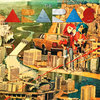
Includes high-quality download in MP3, FLAC and more. Paying supporters also get unlimited streaming via the free Bandcamp app.
Alerta de chuvas de delay e rajadas de eco com a aproximação do The Araras. Formado por Gustavo Villela (baixo, guitarra, violão, teclados, ukelele e programações) e Zé McGill (vocais e letras), o duo chega carregado de energia reggae em seu homônimo álbum de estreia. Levando às alturas o conceito de gravação caseira – todos os vocais foram capturados via celular! -, o disco traz os vapores do dub envolvendo uma inusitada colagem de samples - de diálogos de filmes clássicos à lábia dos vendedores de rua.Não é a primeira vez que Villela e McGill batem asas juntos. Amigos desde o século passado, os dois já tiveram outras bandas e chegaram a morar na mesma casa em Los Angeles. Mas as atividades pessoais de cada um – Villela é professor de Antropologia, McGill é escritor – fizeram com que deixassem a música em segundo plano até o começo deste ano, quando o bicho começou a pegar.
“Gustavo começou a produzir músicas em casa, e sempre me mandava os sons. Eu vi como ele foi evoluindo no processo de gravação e comecei a dar algumas ideias de melodias de vocal” conta McGill, autor de “Mordaça” e “Saquarema Sete Três”, entre outros. “Em janeiro, ele me mandou a base de uma música. Em dez minutos, gravei o vocal, em áudio de Whatsapp, no banheiro de casa. Mandei pra ele, que inseriu e editou as vozes em cima da base. E aí a gente pirou, nos empolgamos com a rapidez e pintou a ideia de um disco todo nessa onda de sons jamaicanos, dub reggae, rocksteady, lovers rock...
Os encantos da Jamaica não bateram nos dois de uma hora para a outra. Villela sempre teve em Aston “Family Man” Barret, baixista do The Wailers, uma referência no instrumento. E McGill é um antigo fã de todas as coisas reggae, tanto que um dos contos do seu livro “Fantasmas de carne e osso” é inspirado na faixa “I shot the sheriff”, de Bob Marley. Em comum, os Araras viajam ao som de bambas como Alton Ellis, Desmond Decker, Lee Perry, Sugar Minott e Sly & Robbie.
Acostumado a fazer som com bandas em estúdio, Villela atravessou a pandemia abraçado com o manual do Bandlab, programa digital de gravação musical. Com a ajuda de uma bateria eletrônica, ele foi rascunhando os sons que, mais tarde, quando as máscaras caíssem, seriam usados no disco do The Araras.
“Os instrumentos usados no disco, como baixo, guitarra, violões e ukelele, eu gravei em casa, com um gravador digital estéreo. As baterias foram editadas no Bandlab, misturando elementos de baterias analógicas gravadas com beats eletrônicos”, diz ele. “Depois, pedi ao Zé que gravasse a voz no celular mesmo, porque usaria os filtros e efeitos para redução de ruído e melhoria da ambiência etc.”
Rewind por favor, para explicar que história é essa de gravar vozes no celular
“Sim, as vozes do disco, do Zé e da Barbara Venosa, que participa com backing vocals, vocal da faixa 6 e a concepção da penúltima faixa, foram gravadas nos celulares. Os estúdios deles foram os banheiros. E a qualidade das vozes superou todas as nossas expectativas”, explica.
Com os ingredientes nas mãos, a dupla fez uma imersão de 20 dias nas gravações, durante o escaldante verão de 2024 no Rio de Janeiro. O tempero adicional veio dos samples de filmes como “Um convidado bem trapalhão”, de Blake Edwards, “Faça a coisa certa”, de Spike Lee, e “Down by law”, de Jim Jarmusch, e também de comentários de jornais televisivos sobre o calor na cidade. As altas temperaturas conduziram também as letras de McGill.
“As letras do disco se dividem em dois caminhos: o primeiro é o lado lúdico do verão, o sorvete, a limonada gelada, a piscina, a praia, o namoro etc. O segundo é um caminho mais sombrio, como está na faixa ‘Mister big man’, que trata do aquecimento global e das temperaturas cada vez mais absurdas que a gente precisa encarar”, explica ele.
A parte final veio com as saídas de McGill e Venosa para fazer gravações externas, nas ruas e praias da cidade.
“Um dia, eu estava sentado no sofá, depois do almoço, um calor da porra, e passou na rua aquele carro do ferro velho, um clássico carioca. E o estalo veio na hora: pensei que aquela fala que saía do alto-falante, ‘Geladeira velha, freezer velho, ar-condicionado velho’, cairia bem numa faixa que tinha acabado de ficar pronta (de fato, entrou em “Summertime – and the livin’ is tough”). Então, desci correndo as escadas do meu prédio e parei o carro do ferro velho no meio da rua pra gravar, no celular mesmo”.
O resultado de toda essa brisa ficou espalhado pelas 12 faixas do álbum, dos teclados à la Jackie Mittoo de “Swimming pool” ao transe de “Pacto de sangue”, com a voz de Nastassja Kinski, em “Paris, Texas”, ecoando ao fundo, passando pelo amor derretido de “Ice cream” e pelo barato em câmera lenta de “Hotter than Trenchtown”, a voz fantasmagórica do locutor dizendo “Sabe a sensação térmica? 50 graus, que tal?”.
“O disco acabou virando uma obra de colagens, num esquema meio dadaísta, com as falas todas, os pedaços recortados de instrumentos de metal, as duas baterias diferentes em algumas faixas”, resume McGill. “Acho que o Zé e a Barbara fizeram uma verdadeira antropologia sonora”, completa Villela.
Agora mais notícias sobre clima e previsão do tempo.
Segundo o INMET (Instituto Nacional de Meteorologia), o verão de 2024 foi mais quente que os três últimos: 2021, 2022 e 2023. Já de acordo com o observatório climático europeu Copernicus, as temperaturas globais de fevereiro de 2024 foram as mais quentes já registradas nesse mês desde 1850, período de referência da era pré-industrial.
Carlos Albuquerque
(Rio de janeiro, abril de 2024)
***
Warning of delay effect rains and echo bursts as The Araras approaches. Formed by Gustavo Villela (bass, electric guitar, acoustic guitar, keyboards, ukulele and programming) and Zé McGill (vocals and lyrics), the duo arrives full of reggae energy on their self-titled debut album. Taking the concept of home recording to new heights – all vocals were captured via cell phone! –, the album features the vapors of dub involving an unusual collage of samples – from classic film dialogues to the talks of street vendors.
It’s not the first time Villela and McGill have flapped their wings together. Friends since the last century, the two have been in other bands together and even lived in the same house in Los Angeles. But the personal activities of each of them – Villela is an Anthropology professor, McGill is a writer – made them put music on the back burner until the beginning of this year, when the beast was unleashed.
“Gustavo started producing music at home and he always sent me his songs. I saw how he was evolving in the recording process and started to throw in some ideas for vocal melodies” says McGill, author of Mordaça and Saquarema Sete Três, among other books. “In January, he sent me the basis for a song. In ten minutes, I recorded the vocals, in WhatsApp audio, in the bathroom at home. I sent it to him, who inserted and edited the voices on top of that base.And we just freaked out… We got excited with that speed and came up with the idea of an entire album in this mood of Jamaican sounds, dub reggae, rocksteady, lovers rock...”
The charms of Jamaica did not hit them both overnight. Villela always had Aston “Family Man” Barret, bassist for The Wailers, as a reference on the instrument. And McGill is a longtime reggae fan, so much so that one of the short stories in his book Fantasmas de carne e osso is inspired by the Bob Marley track “I shot the sheriff.”In common, the Araras travel through the sound of greats such as Alton Ellis, Desmond Decker, Lee Perry, Sugar Minott and Sly & Robbie.
Used to making music with bands in the studio, Villela went through the pandemic embracing the Bandlab manual, a digital music recording app. With the help of a drum machine, he sketched out the sounds that, later, when the masks fell off, would be used on The Araras' record.
“The instruments used on the album, such as bass, electric guitar, acoustic guitar and ukelele, I recorded at home, with a stereo digital recorder. The drums were edited in Bandlab, mixing elements from recorded analog drums with electronic beats”, he says. “Then, I asked Zé to record the voice on his cell phone, because I would use the filters and effects to reduce noise and improve the ambience”.
Rewind please, to explain what this deal is about recording vocals on cell phones.
“Yes, the voices on the album, sung by Zé and Barbara Venosa – who participates with backing vocals, lead vocal on track 6 and the conception of the eleventh track – were all recorded on cell phones. Their studios were their bathrooms. And the quality of the vocals exceeded all our expectations,” he explains.
With the ingredients in hand, the duo immersed themselves in recording for 20 days, during the scorching summer of 2024, in Rio de Janeiro.Additional spice came from samples of lines from films such as Blake Edwards' "The Party", Spike Lee's "Do the Right Thing", and Jim Jarmusch's "Down by Law", and also from TV newspaper comments about the heat in the city.The high temperatures also drove McGill's lyrics.
“The album's lyrics are divided into two paths: the first is the playful and pleasant side of summer, such as the ice cream, cold lemonades, swimming pools, the beach, summer dating and so on. The second is a darker path, as portrayed in the track ‘Mister big man’, which deals with global warming and the increasingly absurd temperatures that we need to face”, he explains.
The final part came with McGill and Venosa's excursions to make outdoor recordings, on the city's streets and beaches.
“One day, as I was sitting on the couch after lunch, it was so fucking hot andthis car from the junkyard (a Rio de Janeiro classic) passed by on my street. And the click came right away: I thought that the advertising line that came out of the car’s speaker, which said 'Old fridge, old freezer, old air conditioning', would fit well on a track that had just been finished (in fact, it was included in “Summertime – and the livin' is tough”).So, I ran down the stairs of my building and stopped the junkyard car in the middle of the street to record, on my cell phone.”
The result of all this breeze was spread across the album's 12 tracks, from the Jackie Mittoo-esque keyboards of “Swimming pool” to the trance of “Pacto de sangue”, with the voice of Nastassja Kinski, in “Paris, Texas”, echoing in the background, passing through the melting love of “Ice cream” and the slow-motion high of “Hotter than Trenchtown”, with the ghostly voice of the announcer saying: “Can you guess the thermal sensation? 122 degrees Fahrenheit, how about that?”.
“The album ended up becoming a work of collages, in a somewhat Dadaist style, with all those pieces of dialogues, the cut-out pieces of brass instruments, the two different drums on some tracks”, summarizes McGill. “I think thatZé and Barbara created a true anthropology of sound”, adds Villela.
And now more news about the weather forecast.
According to INMET (Brazilian National Institute of Meteorology), the summer of 2024 was hotter than the last three: 2021, 2022 and 2023. And according to the European climate observatory Copernicus, global temperatures in February 2024 were the hottest ever recorded in that month since 1850, the reference period of the pre-industrial era.
By Carlos Albuquerque
(Rio de Janeiro, April 2024)
Selo de música independente de Campo Grande-MS.
Indie label based on Campo Grande, MS, Brazil.
Found tracks
|
The Araras - Swimming Pool
|
Download
|
|
The Araras - Homemade Ice Cold Lemonade
|
Download
|
|
The Araras - Ice Cream
|
Download
|
|
The Araras - Summer Affair
|
Download
|
|
The Araras - Mister Big Man
|
Download
|
|
The Araras - Summertime (And the Livin' is Tough)
|
Download
|
|
The Araras - Pacto de Sangue
|
Download
|
|
The Araras - Arara
|
Download
|
|
The Araras - Waiting for a Chance
|
Download
|
|
The Araras - Hotter than Trenchtown
|
Download
|
|
The Araras - Fervo
|
Download
|
|
The Araras - And Now for Something Completely Different
|
Download
|
Suggestions

|
|
|

|

|
|

|

|

|

|